The ugly duckling
The other day, while doing my usual round of research, an interesting article in The Guardian caught my attention. It was titled Most people avoid ugly animals. I'm obsessed with them. The young and gifted author, Sami Bayly, has written and illustrated a whole children’s book, about so called distasteful creatures. As part of her honors work, she has researched on the impact of an animal’s appearance on how willing humans were to assist with its survival. One of her assertions is that “large and impressive animals found in safari parks or reservation... tend to receive more press, better benefits and more donations – while less popular or “ugly” animals are left behind”. She also goes on to point out why myths and superstitions about some of these animals, can also prevent people from making equivalent conservation efforts.
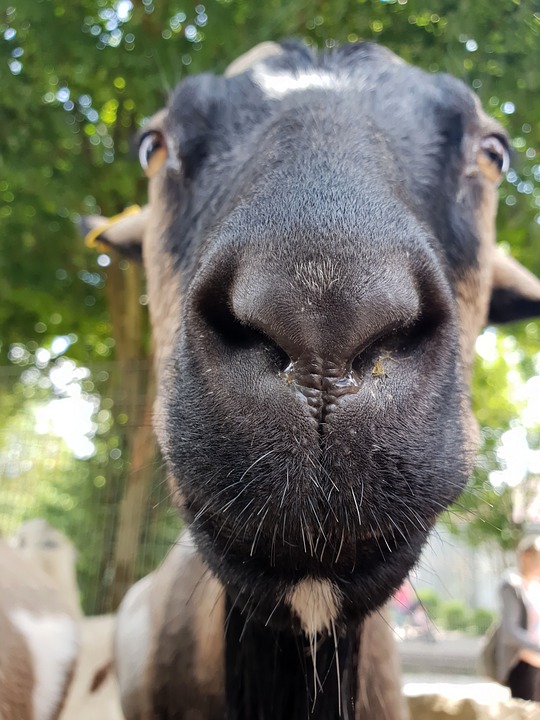
Image courtesy - Pixabay
Having been in the child care space for a few years, we too have come across ‘ugly’ children. They are children, whom no one wants to touch, even with a barge pole! We bumped into this nugget of information, in our early conversations with child care institutions. Government owned institutions are usually the final dumping grounds for children who are refused to be cared for, by even child care institutions run by NGOs! Everyone likes a normal child. A child who shows potential. A child who is compliant to rules. A child who can generate social return on investment. A child who can do well in life and bring good repute to the institution. A child who becomes a poster boy/girl for the organization. A perfect case study to be quoted ad nauseam, in seminars and conferences. Donors / Volunteers are thrilled to hear such inspirational stories and want to invest more of their time and money on such children. And rightly so. Our country is filled with children in distress who needs love and support. But in this desire to help the needy, more often then not there are some left overs, who find it hard to get assistance.
So who are these rejects, from the very institutions who have pledged to take care of children? Some of these children may have certain congenital disorders and thus repulsive to the potential adoptive parent / institution. A few of them may have severe to mild mental retardation. Some may be visibly disfigured / disabled / trans and hence finish at the bottom of the pick. Some of them might have terminal medical conditions. Some may be coming from traumatic background and so might later “prove to be difficult to handle”. In their defense, it is true that special children need specialized care, some of which may be expensive. Not all child care institutions are equipped for such special children (note the subtle switch in language from ‘ugly’ to special). But in a country like ours, how many specialized institutions are there to care for such rejects? The demand-supply gap is huge. Just like the Ugly Duckling, they often have to face the wrath of society - both overt and covert.
The final paragraph from the story of the Ugly Duckling is triumphant. It is earth ‘quaking’!
The handsome young swan lifted his head, looking all around him. “This cannot be a dream,” he thought. “I could never have dreamed of being so happy when I was the Ugly Duckling!”
The Ugly Duckling had to be transformed into a handsome swan, for it to find acceptance - from self as well as from outside. Can our Ugly Ducklings too have a happy ending? Can our children too be able to lift their heads high and believe in themselves, no matter who they are? Just like the ugly animals, our society needs to understand that this section of children also needs quality care and protection. We need not be afraid of them. This requires a paradigm shift in attitudes, education and vision. Do you have a dream? Are you ready to make a difference - to smudge away the ugliness, even if it is a wee bit?